
Auto Paint Types Explained: A Beginner’s Guide to the Right Finish
Not all car paint works the same. Learn which type lasts longer, looks better, and fits your budget.

Choosing auto paint gets confusing fast when every option sounds technical. This guide breaks down the main types of auto paint in plain English, so beginners can understand how each one differs in durability, finish, cost, and repairability. If you want to make a smarter decision before a repaint or touch-up, this is a solid place to start.
Let’s simplify it.
Why Auto Paint Type Matters
Auto paint isn’t just about color—it affects how your car looks over time, how well it resists damage, and how easy it is to maintain.
The wrong choice can mean fading, peeling, or expensive repairs down the road. The right one? A finish that holds up, looks sharp, and fits your budget.
The 4 Main Types of Auto Paint
Here are the most common types you’ll encounter:
1. Acrylic Lacquer
This is one of the oldest types of automotive paint.
It dries fast and gives a smooth, glossy finish, but it doesn’t last long compared to modern options. It’s also more prone to fading and chipping, especially under harsh weather.
Best for: Classic cars or low-budget projects where longevity isn’t the priority.
2. Acrylic Enamel
A step up from lacquer, acrylic enamel creates a harder, more durable surface.
It forms a solid shell over your car, which helps resist wear and tear better than lacquer. Some versions include a hardener to improve durability even more.
Best for: Budget-conscious users who still want decent durability.
3. Urethane Paint (Most Popular Today)
Urethane is the industry standard for modern vehicles—and for good reason.
It’s highly durable, resistant to UV rays, and holds its color for years. It also offers a professional-grade finish that looks sleek and polished.
Best for: Daily drivers, long-term durability, and professional repaint jobs.
4. Water-Based Paint
This is the eco-friendly option that’s becoming more common in body shops.
Instead of harsh solvents, it uses water as a base. It’s safer for the environment and still delivers strong color quality, but it typically requires a clear coat for protection.
Best for: Environmentally conscious users and newer auto body shops.
Understanding Paint Finishes
Paint type is only half the equation—finish matters too.
Here are the common finish styles:
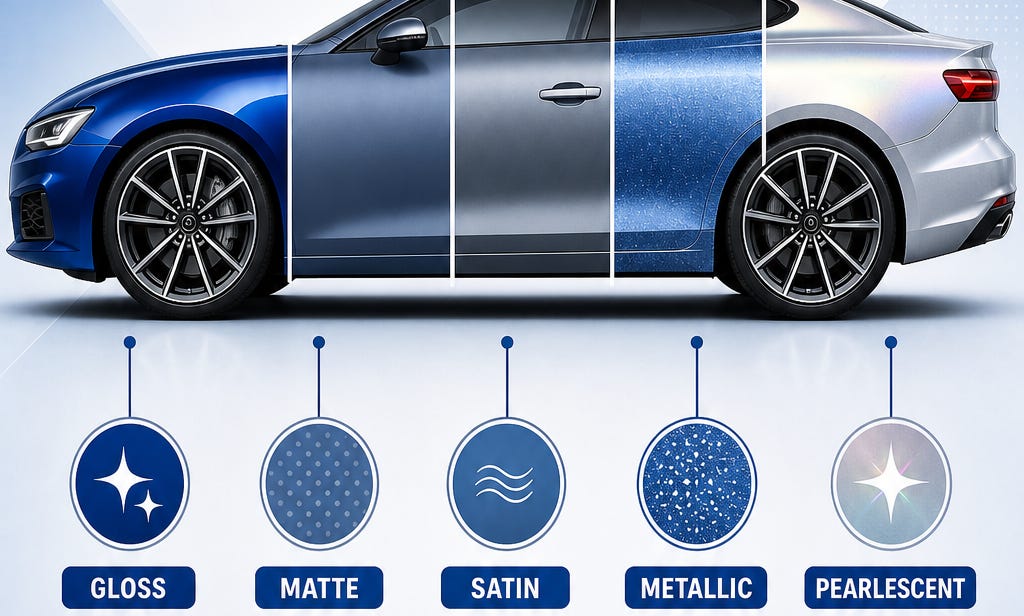
Gloss: Shiny and reflective, the most popular choice.
Matte: Flat, non-reflective, and modern-looking but harder to maintain.
Satin: A balance between gloss and matte, offering a subtle sheen.
Metallic: Contains tiny metal flakes for a sparkling effect.
Pearlescent: Adds a color-shifting effect for a premium look.
Each finish affects both aesthetics and maintenance. For example, matte looks unique but is less forgiving when scratched.
Cost vs. Durability: What Should You Choose?
If you’re trying to balance budget and performance, here’s a simple way to think about it:
Low budget: Acrylic lacquer or basic enamel (short-term solution)
Mid-range: Acrylic enamel with hardener (better durability)
High-end: Urethane or water-based systems with clear coat (long-term investment)
Spending more upfront usually means fewer repaints later.
Repair and Maintenance Considerations
Not all paints are equally easy to fix.
Urethane and water-based paints are easier to blend and repair, making them ideal for long-term ownership. Lacquer, while easy to apply, often requires more frequent touch-ups.
Also, always consider how the paint reacts to polishing, waxing, and environmental exposure.
Final Thoughts
Choosing the right auto paint doesn’t have to be overwhelming.
Focus on three things: how long you want it to last, how much you’re willing to spend, and how much maintenance you’re okay with. Once you understand those factors, picking the right paint type becomes much easier.
If you’re planning a repaint or just exploring your options, knowing these basics will help you avoid costly mistakes.
Read the full guide here: https://autobahncollisionny.com/types-of-auto-paint/